Monday, 25 August 2014

Sylviander House in the Rain


It was a good monsoon this year. 


We always enjoy the song of the rain drops, whatching through the windows, while doing our work – Alexander is painting, I am writing on a novel … 


It‘s the best time especially for artists or people who need concentration for their work. 


What is that? Rain in the night! I took the photo with flash from our roofed verandah – what a strange image!


When it rains for some days, our pond over flows a bit. But we are lucky, while some houses in the neighborhood are surrounded by water, most parts of Sylviander garden is not flooded. 


This year even our well was filled up with rain water! Great for us, now we can have our shower with rain water! What a luxury! 


Then how beautiful after a long rain, when sun appeares through the rain clouds, to illuminate the rain drops falling … 


Thursday, 14 August 2014

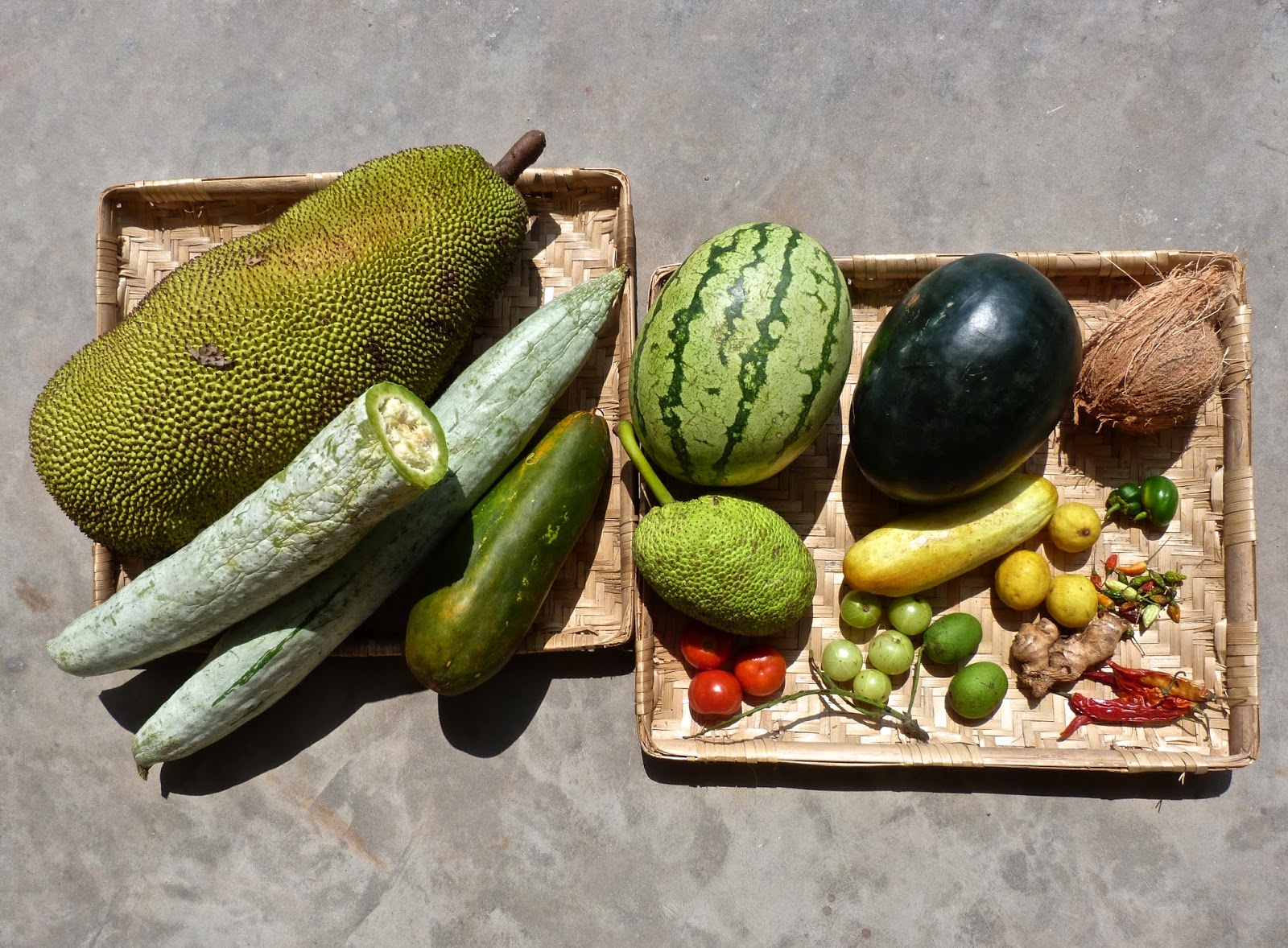
Culinary Joy: Passion-fruits & Papaya!


Nowadays we are lucky in Sylviander House, our passionfruit plantation grows happily and so do the many papaya I have planted around the house – just put the seeds here and there after having eaten a ripe Papaya. 
Then of course care them, bring them our kitchen waste, also banana and passion fruit plants appreciate that natural fertilizer. 
And when climate was so dry in the first half of this year 2014, I had to give them water every day … 


What a pleasure to step into your own garden, harvest what your hand had planted and then make a paradise breakfast … 
Yesterday was such a paradise day in Sylviander House kitchen …


Thanks, nanni, danke! 
To Mother Earth and Nature. 

Monday, 11 August 2014

Photos of the Inauguration CSPA website


Just want to share some images of the inauguration of the CSPA website on August 9, 2014 in Kochi … 


Sethu Das, founder of CSPA, talks about designs&people …

I, Sylvie Bantle, talk about Sylviander House & Art Museum …


Dr.Dorjee presents a gift to Jaspal Singh … 


Jaspal Singh has push the button … 


Eswar explains the project on the website …  


Alexander Devasia offers some sweets … 


Cartoonist Yesudas and Jaspal Singh know eachother long time …


Eswar presents his poem book to Jaspal Singh …


Good-by & Pinne kanam! 
… Jaspal Singh will come with us to Sylviander House to stay for some days …


– thanks to photographer Sreekesh Nair/CSPA

Saturday, 9 August 2014

Inauguration cspa website

Just happily came back from Ernakulam, where the inauguration of the website for our new project took place – have a look!


​
​
www.cspa.in, the official website of 'Centre for Social & Political Art' (CSPA) will be inaugurated by Shri Jaspal Singh IPS, former Minister from Gujarat and former and Mayor of Baroda on Saturday, August 9, 2014 at 12 noon at Ashirbhavan, Ernakulam, Kerala.

CSPA, the first collaborative project of Design & People and Sylviander House is a platform to promote collective involvement of every citizen to appreciate rights of all living beings. It enables the marginalised and victimised people to voice their grievances, build awareness and receive empowerment. The Centre rallies creative artists, thinkers and activists under its banner to work against all power structures. It upholds freedom of all arts and creativity. The Centre is a catalyst, inspiring all vulnerable communities to strive against the existing repressive Social & Political order.

CSPA.in, the website of the institution also be the virtual space for Friends of Tibet Library of Books & Films and Design & People Library of Books. CSPA website allows its members and visitors to choose books and films online without giving a visit to CSPA. Researchers and students from outside Kerala can make use of the ‘Get a Book by Post’ facility. CSPA at Alappuzha consists of two Libraries - 'Friends of Tibet Library of Books and Films' and 'Design & People Library of Books' - developed and maintained by Friends of Tibet and Design & People, two organisations associated with CSPA. The CSPA Library has an extensive collection of books on Art, Design, Society, Politics, Architecture, Human Rights, Photography, Tibet, China, History, Religion, Traditional Medical Systems etc. Library facilities are open to CSPA Associates, Members of CSPA Residency Programmes while memberships are available for individuals and organisations. CSPA will also have a permanent collection of original photograhs of renowned Indian and International Photographers. Some of them are including Angel Lopez Soto (Spain), Brian Harris (Canada), Diane Barker (UK), Jaqueline Meier (Switzerland), John Ackerly (USA), Giulia Francesca Johnson (USA), Lobsang Wangyal (Tibet), Kathryn Culley (USA), Manuela Metelli (Italy), Ken Damy (Italy), Nancy Jo Johnson (USA), Prabir Purkayastha (India), Prabuddha Dasgupta (India), Sonam Zoksang (USA), Suresh Natarajan (India), Vijay Kranti (India) and William Chapman (USA).

CSPA houses rare collections of art and artifacts from Tibet. The Museum section is being made possible with the generous support from Friends of Tibet, a Tibet Support Group and a Member Organisation with CSPA. The Centre also houses original and prints of political cartoons by renowned Indian cartoonists.

All are welcome!

To know more, visit: http://www.cspa.in or call: +91.9995181777, +91.9645817014
Fax: +91.11.4761514 Email: life@cspa.in 


Saturday, 2 August 2014

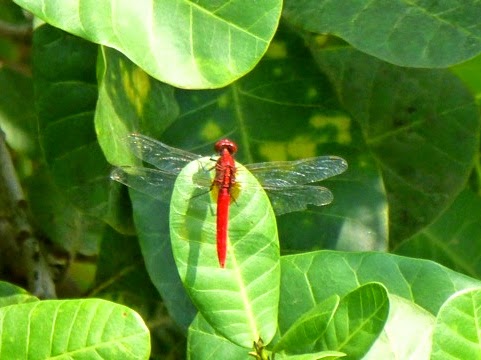
Butterflies&Dragonflies_02


Thanks to Dorothea, our guest from Germany during January 2013, we‘ve got some joyful impressions of these beauties … 


… flying from blossom to blossom of trees and plants in the garden around our Sylviander House. 


Since Dorothea spent her holidays here, she got plenty of time to sit and watch with her 2 cameras on our verandahs … 


… full of patience waiting for the right moment … 


 … to catch wonderful pictures, which we can enjoy now and again and again … 


… even though everybody knows, how important these tiny creatures are for the supply of our food – which means not only honey, but mainly their effort to pollenizing all the plants of our fruits, vegetables, nuts … 


… and even though everybody knows, that too many pesticides globally spread on the plants by humans will kill them … 


… why humans still go on by spraying pesticides, which kill them? 


Instead of going on in such self destructing manner, better let us care for that our garden will be full of flowers and blossoms to provide delicious food for our hard-working tiny supporters!


Whenever we see somebody using pesticides for plants, we explain them, how humbly we have to say thanks … 


Please keep your eyes open and remember the need of support of each petition fighting for the lives of bees and butterflies, and then sign – humankind of future will even thanks to us.

© all photographs by Dorothea Geist

Sunday, 13 July 2014

Thirumal, the traditional Kerala massage for the Wellbeing


Karkidakam would be the best time for having a Thirumal, a traditional Kerala massage, people say. Karkidakam is the malayalam month from mid of July to mid of August. Then monsoon has started in Kerala, the climate is pleasant cool with lot of rain between warm sunshine, with wonderful cloud formations, colorful illuminated during sunrise and sunset. 


What a pleasure, during that time plenty of Maracuja fruits are growing in our garden. Every day we can eat these delicacy fruits and because they grow so plenty, I make Maracuja jam and fruit jelly, which tastes delicious with a dab of self-made curd from the milk of a neighbor‘s cow (eating the organic medicinal grass in our garden!) … And what a beauty the Maracuja‘s flowers are! 


Thirumal is the respectful malayalam name for the traditional Kerala massage, which has a very long tradition. Once in every village were at least a man and a woman treating the villagers in need. 
And of course, Thirumal can be done in any month of the year. 

© Sandra Merx

We are very lucky to have found our Lilama from the village. She is doing the massage for women. For men we have an ayurveda masseur coming from a long traditional ayurveda family. His wife also is a good masseur and will be an additional help, whenever to many guests are to be massaged the same time. 

© Sandra Merx

Massage starts in the morning before breakfast. For that Lilama has to prepare the medicinal water. In a huge pot she boils several medicinal barks over an open fire behind the house. While the massage, which will take around 40 minutes, the water cools down, to be used then for the medicinal bath after the massage in the attached bathroom next to the massage room. Lilama rubs the whole body of the client with a herbal soap and a natural fiber of a plant, then will pour the hot medicinal water over the body … 
I‘ve got many massages like that and afterwards I always felt like a baby after being washed by the mother.  

© Sandra Merx

It is recommended to have massages for 1 week or better for 2 or 3 weeks. This purification treatment needs time to become powerful to rejuvenate the body by detoxication – a physical as a mental process. 
An ayurvedic doctor once explained to me the importance of time: If you have a very dirty dress, at first you soak it in soap water for a while. Then you will rub it with soap for some time. After that you will rinse with clear water as long soap and dirt is seen in the water. These 3 steps are very needed for draining the toxins from the tissue and finally wash it out from the body. 
All our guests who had a Thirumal treatment felt the inner reaction – to let go waste is a physical and a mental process. Afterwards they sensed positive new energies for their life, and some took new decisions. Many lost weight and were very happy about that. 


Lilama is an exellent cook too and besides she helps us to keep the house clean.
Of course along with the massage treatment healthy food is recommended. 

© Sandra Merx

For lunch Lilama prepares a rich ayurvedic meal with different kind of vegetables – some from our garden, some from organic farmers in the neighborhood. These will be served together with rice and fish, which we often fry on banana leaves from our garden. 

© Ravindra Ranasinha

Among the vegetables there is a rare sort of pumpkin (malayalam: Neykumbalam), no Hotel will prepare and serve. This native pumpkin is used for ayurvedic treatment for its detoxicational effect. Mostly we prepare it as a soup, sometimes with coconut milk. If you eat it everyday for sure you will loose unwanted weight.
Within one day we once cured guests, who arrived sickly in our Sylviander House! 
By the way, it tastes delicious! 


One of our guests who lost 4 kilo during her 3 weeks massage treatment said: What a pleasure, loosing weight with feasting! 


During the time of Thirumal treatment one should rest – very important are the first 3 days. Then one feels very tired and will sleep a lot. After 3 days a short walk through the village or to the nearby beach can be done, later some excursions with the car or auto rikscha to nearby Alappuzha town or a temple or some other interesting places not far away. 


A Thirumal treatment brings peace. You will enjoy plenty of time relaxing on the verandah, watching the sky and the nature of our garden with the pond, and fly with the many birds … 

Sunday, 6 July 2014

Squirril babies under the roof


Rarely owls reside for a night under the roof of Sylviander House, but permanent residents are squirrils. Twice a year they have babies – mostly two. 


As soon as these squirril kids are old enough, they start couriously climbing down the pillars, then running over the verandas, through our rooms … Not always a pleasure for us, because they have the habit to push down all the loose leftovers of the mason‘s mortar from the walls. Sometimes, shortly after we‘ve just broomed the floor, again dried pieces of mortar are laying there. 


But for our guests the squirril babies are a lot of fun and highlight their holidays in our house. Often for hours they sit silently waiting for these tiny cute beings may appear and then exited take photographs … 


They don‘t mind to find their soap next morning half eaten. Yes, these squirrils have a taste to soap and eat it whenever they get the chance. That‘s why we have to cover our soap over night. 


And not only strange delicacies as soap, they appreciate also towels and my hammock to eat, both made from cotton. 
Of course they like cashew-mango too – we have to hurry to get some fruits before them …

Sometimes we are very lucky to watching them, how tender they are to each other, even give kisses … 


(Thanks for some photographs from © Dorothea Geist and © Sandra Merx)